Fraxinus pennsylvanica


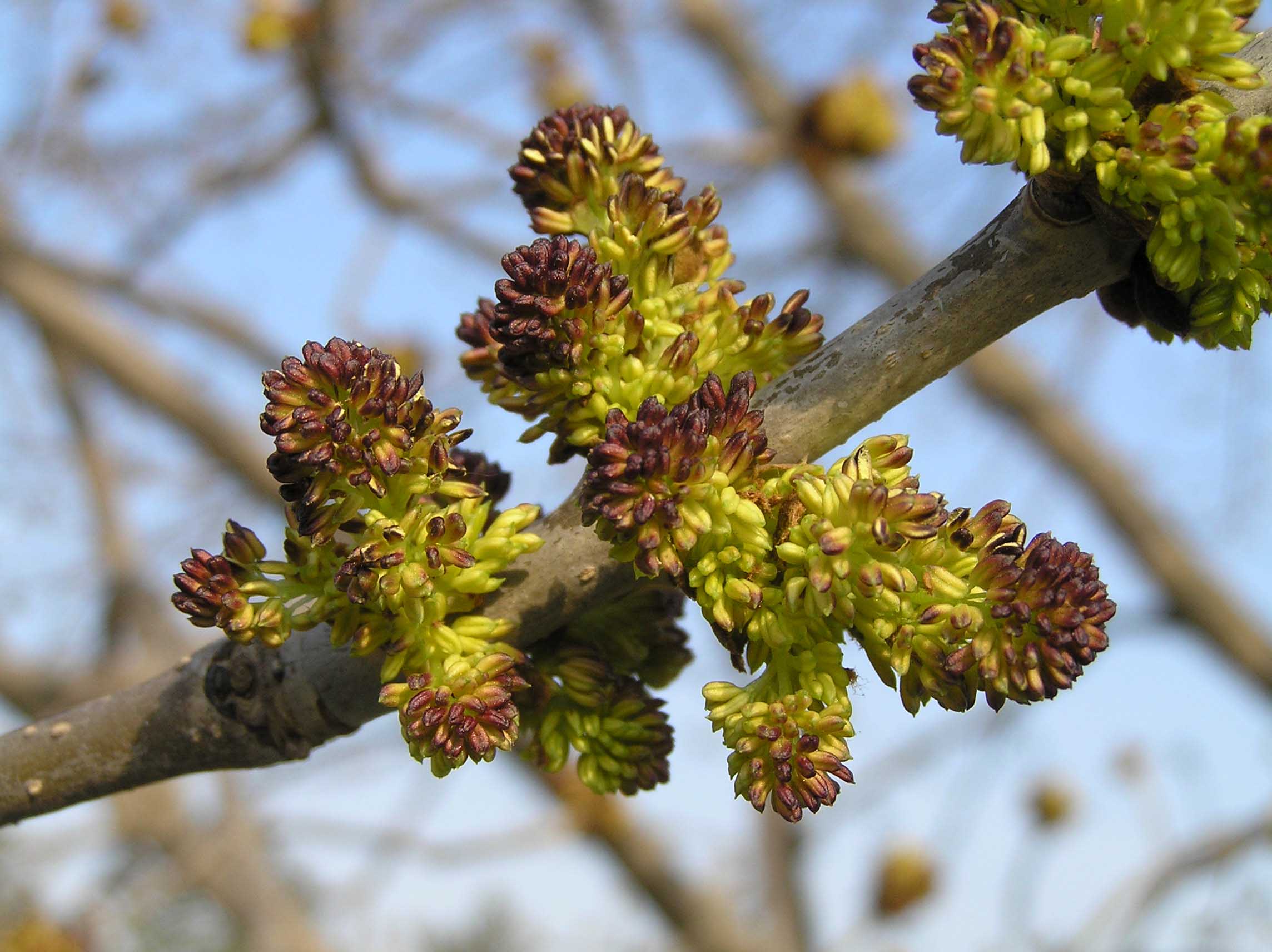
Green Ash
The Green Ash is a popular shade tree native to eastern and central North America. Although somewhat pyramid-shaped when young, it grows into a more rounded oval-shaped mature tree that can reach 70 feet, but most commonly tops out around 50-60 feet.
While the Green Ash has long been used for shade and in windbreaks, it is now considered severely threatened due to the introduction of the Asian emerald ash borer to North America in 2002. These pests seem to have a preference for Green Ash, killing approximately 99% of mature trees within 3-5 years of infestation.
The following identification information is from Trees of Alabama, a Gosse Nature Guide by Lisa J. Samuelson. Use of this text was permitted by the University of Alabama. Order your own copy of this great guide to Alabama’s trees here: https://www.amazon.com/Trees-Alabama-Gosse-Nature-Guides/dp/0817359419
Green Ash Fraxinus pennsylvanica Marshall
COMMON NAMES green ash, swamp ash, water ash
QUICK GUIDE Leaves opposite, pinnately compound, usually with seven leaflets; leaflets elliptical to lanceolate; lateral bud sits above the shield-shaped leaf scar; fruit a single samara with the wing extending halfway down the narrow, elongated seed; bark brown-gray with interlacing ridges forming a diamond pattern.
DESCRIPTION Leaves are pinnately compound, opposite, deciduous, and up to 30 cm (11.8 in) long, with seven to nine leaflets. Leaflets are elliptical to lanceolate and 5-15 cm (2.0-5.9 in) long; margin is entire or remotely serrate; underside is glabrous or pubescent; autumn color is yellow. Twigs are moderately stout, gray-brown, and glabrous or pubescent, with lenticels and flattened nodes; leaf scar is shield shaped with bundle scars forming a U shape. The terminal bud is round, up to 8 mm (0.3 in) long, and dark chocolate brown, with suedelike scales; lateral bud is smaller and sits above the leaf scar. Flowers are dioecious; staminate flowers are red-green, short-stalked, and in dense compact clusters; pistillate flowers are vase shaped and long-stalked, with an elongated style; flowers appear before the leaves. Fruit is a samara, single, spatulate to oblanceolate, and up to 5 cm (2 in) long; wing narrows at the seed and extends about halfway down the seed; fruit matures in the fall. Bark is brown-gray with interlacing ridges forming a diamond pattern; large trees are deeply furrowed. The growth form is up to 36 m (120 ft) in height and 1 m (3 ft) in diameter.
HABITAT Moist to wet soils, such as moist uplands, periodically inundated bottomlands, and edges of streams and rivers.
NOTES Green ash is associated with many species, including silver maple, boxelder, red maple, water hickory, sugarberry, white ash, sweetgum, eastern cottonwood, overcup oak, swamp chestnut oak, water oak, cherrybark oak, willow oak, northern red oak, black willow, basswood, and American elm. The emerald ash borer, a wood-boring insect from Asia that attacks all species of ash, has recently been reported in Alabama. The wood is white to light brown, heavy, hard, stiff, and straight-grained. Wood uses are similar to white ash but the quality is not as high. Green ash is planted as a shade tree. The seed is eaten by a variety of birds and small mammals. White-tailed deer will lightly browse the foliage, and beaver eat the bark.
Fraxinus is Latin for “ash tree”; pennsylvanica refers to the geographic range.
SIMILAR SPECIES Other ashes that can be found in Alabama include: Carolina ash (Fraxinus caroliniana Mill.), also known as water or swamp ash. Carolina ash is found on wet sites in the Southern Coastal Plain and identified by a lateral bud sitting mostly above the leaf scar; a samara that is elliptical to diamond shaped, often three winged, and up to 5 cm (2 in) long, with the wing surrounding the seed; and by bark with scaly ridges. Pumpkin ash (Fraxinus profunda [Bush] Bush) may be found in the extreme southern portion of the state in swamps and bottoms. Pumpkin ash has seven to nine leaflets with white hair on the underside, densely pubescent twigs, and a large samara (the largest of the ashes, up to 8 cm [3.1 in] long) with the wing extending narrowly to the bottom of the seed. Blue ash (Fraxinus quadrangulata Michx.) is an occasional tree on drier upland sites, and it usually has nine leaflets, twigs that are four angled and winged (see appendix for winter twig identification
 Friends of Pinchgut Creek